
WECF at HLPF 2025: Holding the Line for Gender Equality in a Shrinking Multilateral Space
In July 2025, Women Engage for a Common Future (WECF) engaged in the High-Level Political Forum on Sustainable Development (HLPF) at a moment of visible political regression for gender equality, sexual and reproductive health and rights (SRHR), and civil society participation.
HLPF 2025 was marked by weakened political ambition, the growing normalisation of anti-gender narratives, and a widening gap between formal commitments to the SDGs and the lived realities of feminist and civil society actors. Against this backdrop, WECF’s role focused on what is increasingly essential but often invisible: movement infrastructure, coordination, and safeguarding access to policy spaces under pressure.
A challenging political context
Negotiations on the HLPF Ministerial Declaration confirmed a broader trend of norm erosion. Language on gender equality and SRHR was systematically weakened, while binary and exclusionary framings of “family values” gained ground. Several Member States actively worked to dilute agreed international principles, while others participated with reduced political engagement.
Civil society spaces, although formally present, were widely experienced as procedural rather than substantive. Many participants described a sense of political fatigue and resignation, with limited room for accountability or transformative debate. At the same time, civic space restrictions, including visa denials linked to activism, continued to undermine who is able to participate in global policy processes.
Within this constrained environment, WECF prioritised holding feminist ground, ensuring continuity of advocacy, and enabling civil society actors, particularly from the UNECE region, to engage meaningfully with decision-makers.
Women’s Major Group members at the morning caucus chanting “feminists want system change”, a campaign co-developed by WECF.
Our strategic role: Infrastructure, coordination, and access
Rather than prioritising visibility, WECF acted as a behind-the-scenes infrastructure builder and mobiliser, working across pre-HLPF, HLPF, and post-HLPF phases. This included:
- Coordinating regional and global civil society positions and inputs
- Supporting feminist strategy spaces and daily caucus coordination
- Mobilising speakers, preparing interventions, and disseminating advocacy content
- Facilitating access to closed decision-maker spaces otherwise unavailable to many civil society actors
- This role was particularly critical as feminist and women’s rights organisations faced shrinking political space and reduced access to formal speaking opportunities.
Convening feminist dialogue beyond rhetoric
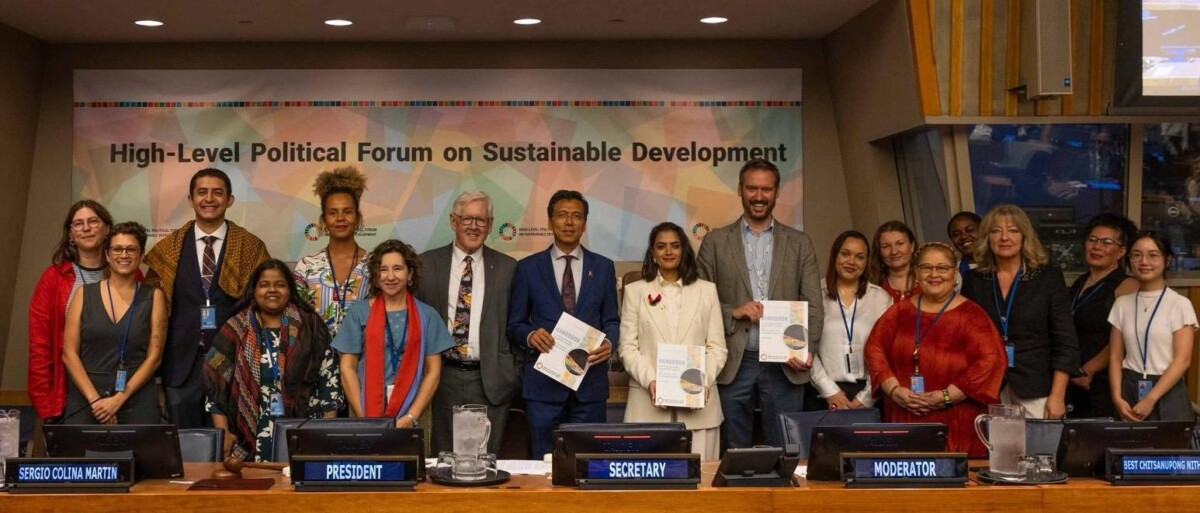
WECF led and supported several spaces that moved beyond rhetorical commitments toward political clarity and movement strengthening. This included co-organising an official HLPF side event, Spearheading SDG 5: From Stagnation to Implementation, which convened 73 participants from more than 40 countries.
The event brought together an intergenerational, cross-regional feminist constituency, predominantly women-led civil society, alongside youth movements, disability rights advocates, UN agencies and a small number of policy-makers. Discussions focused on barriers to SDG 5 implementation, accountability gaps, and the urgency of feminist collective action with only five years remaining to the 2030 Agenda.
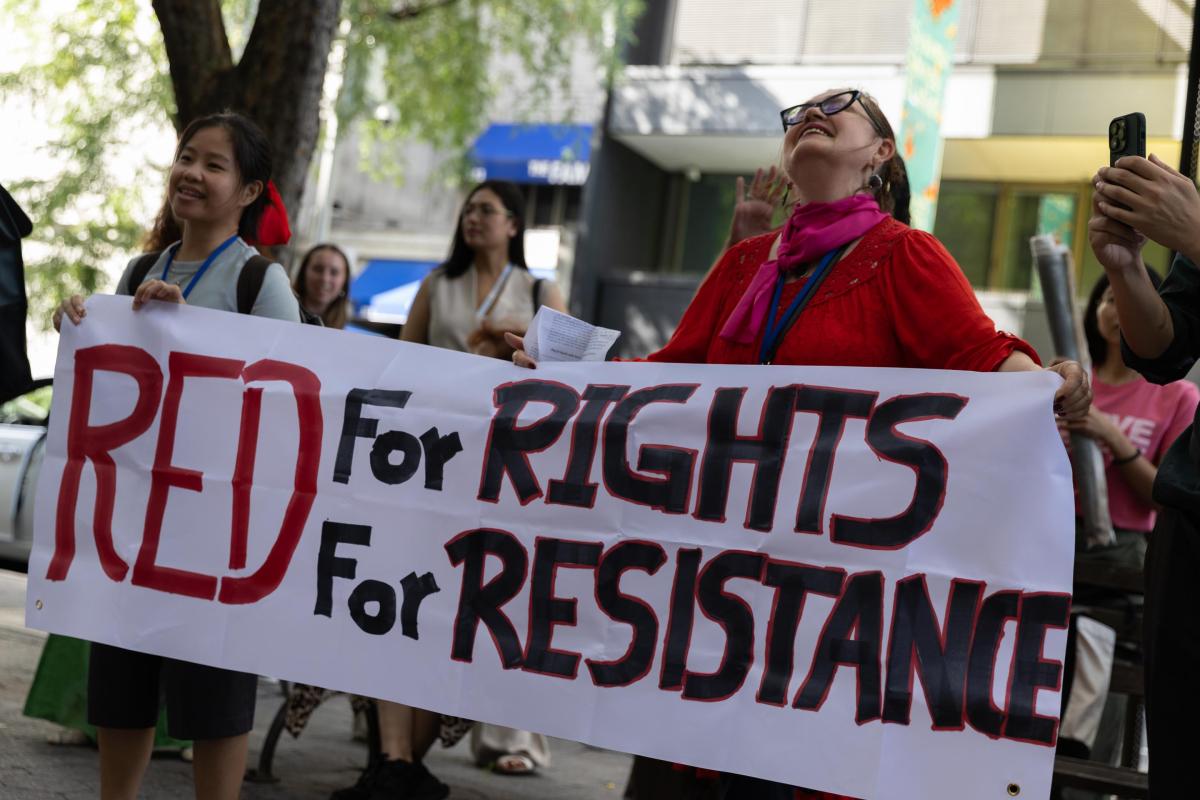
In parallel, WECF supported feminist collective action through the Feminists Hold the Line mobilisation, which provided a visible “inside–outside” advocacy strategy. Such actions remain essential at HLPF, where closed negotiations increasingly limit the scope of civil society interventions.
Enabling civil society access to decision-makers
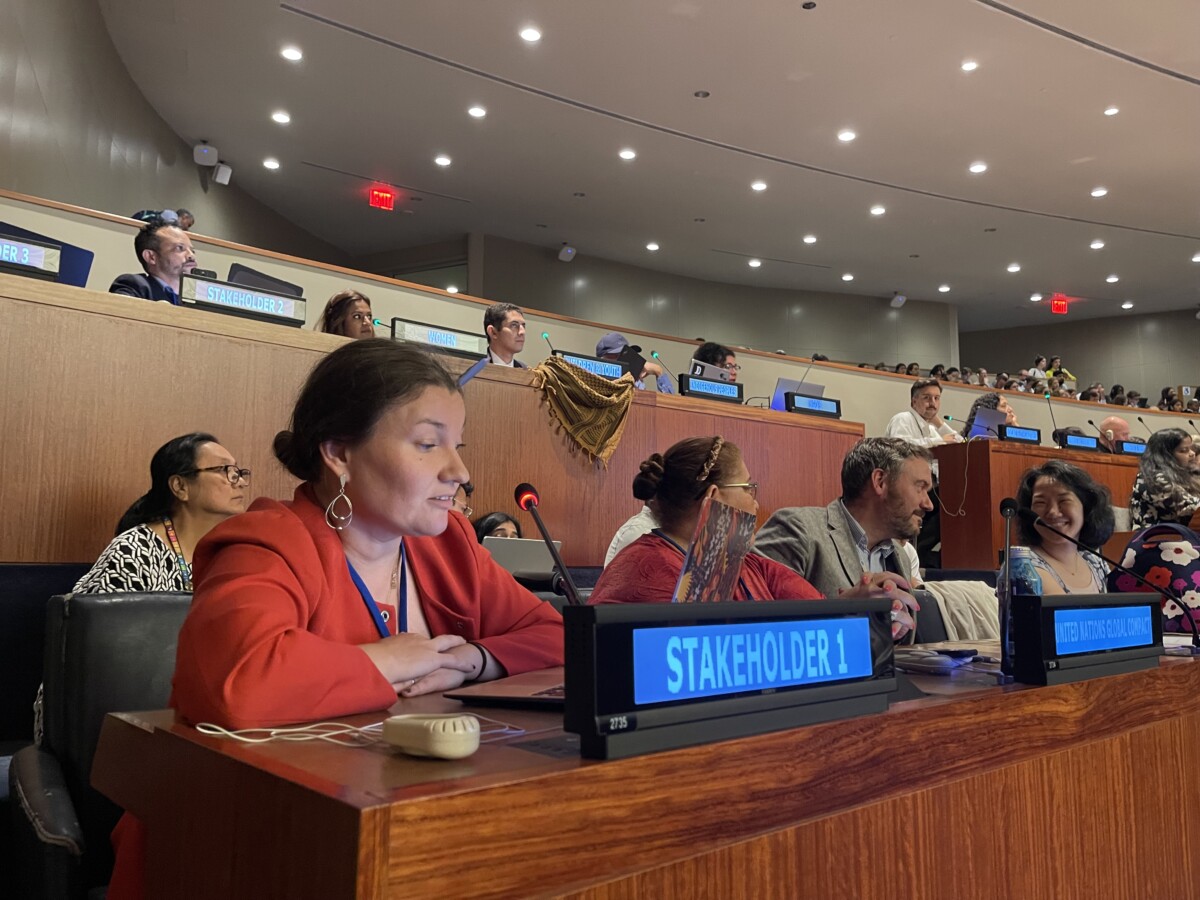
Despite the constrained environment, WECF facilitated targeted engagement with decision-makers and UN leadership. This included securing civil society access to high-level bilateral and networking spaces, and coordinating joint advocacy points emerging from regional civil society processes.
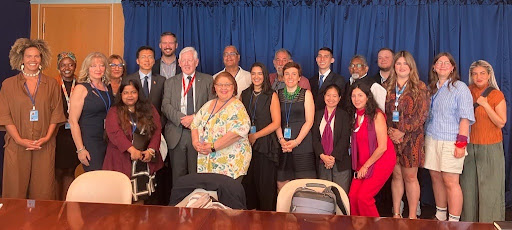
Importantly, WECF mobilised civil society representatives into these spaces with a clear mandate, ensuring they spoke not as individuals but as representatives of broader constituencies. In one case, ten civil society representatives engaged directly with decision-makers while conveying priorities shaped by more than one hundred regional members. 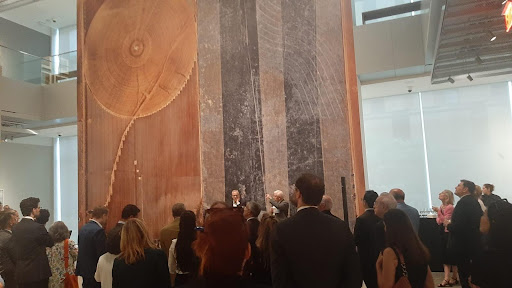
WECF also raised barriers to participation directly with UN leadership, including a visa denial linked to climate activism; highlighting how civic space restrictions undermine inclusive and representative SDG implementation.
Advocacy continuity in a time of backlash
Across HLPF 2025, WECF coordinated advocacy before, during and after the forum. This included preparatory calls, daily coordination and rapid-response advocacy during the forum, and post-HLPF political analysis linked to emerging UN reform processes.
This continuity is critical. As UN institutions face budget cuts, geopolitical polarisation and reform pressures, feminist civil society risks being further marginalised. Sustained investment in coordination, analysis and access — rather than one-off events — is essential to protect gender equality and civic space within multilateral systems.


Why this matters for EU Support
WECF’s participation in the High-Level Political Forum on Sustainable development is made possible through the financial support of the WomenPower 2030 programme, Funded by the EU. The views and actions done by WECF should not be interpreted to represent the views of the EU.
WECF’s engagement at HLPF 2025 demonstrates the continued need for long-term investment in feminist movement infrastructure, particularly as multilateral spaces become more restrictive and politically fragile. For EU partners committed to gender equality, human rights and inclusive multilateralism, this work is essential to ensure that civil society participation remains meaningful — not merely symbolic — in global policy processes.
HLPF 2025 – Our impact at a glance
Convening & organisation
8 events organised or co-organised / supported, including:
- 1 official HLPF side event (Spearheading SDG 5) with 73 participants from 40+ countries
- 4 regional preparatory calls (ECE-RCEM)
- 1 feminist collective action (Feminists Hold the Line) with 35+ participants
- 1 strategic regional membership meeting with ~30 civil society members
- 1 APRCEM–ECE-RCEM official side event (agenda-setting, speaker mobilisation and dissemination support)
Advocacy & policy influence
11 advocacy inputs coordinated, including:
- 4 policy interventions (delivered or jointly prepared)
- 1 global position paper integrating regional civil society inputs
- 6 joint statements disseminated through global advocacy platforms
Decision-maker engagement
3 high-level decision-maker engagement spaces facilitated, including:
- Bilateral with incoming and outgoing ECOSOC Presidents
- Bilateral with UNECE Executive Director
- Closed Member State networking space (Canadian Mission)
- 10 civil society representatives mobilised into decision-maker spaces, representing priorities from 100+ regional civil society members
Movement mobilisation
- 40+ regional civil society members actively coordinated during HLPF
- 130+ Women’s Major Group members supported through shared advocacy infrastructure
Advocacy continuity & civic space
- Advocacy coordinated before, during and after HLPF 2025
- Barriers to participation raised at high level, including a visa denial linked to climate activism