
Meet the 2026 Gender Just Climate Solutions Awardees
What do solar energy in Vanuatu, cacao farming in Colombia and women’s land rights in Mexico have in common? At COP31, three women-led initiatives are showing how climate solutions are already taking shape in their communities.
In this 11th edition of the Gender Just Climate Solutions Awards, we are once again struck by the diversity of approaches emerging from different territories, each shaped by local realities and the needs of the communities driving them. Together, these initiatives remind us that meaningful climate action takes many forms, and that gender equality and women’s rights must be at its centre.
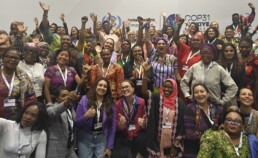
On November 16, during the 31st UN Climate Change Conference (COP31) in Antalya, Türkiye, the Gender Just Climate Solutions (GJCS) Awards celebrated three new outstanding women-led initiatives from Vanuatu, Colombia and Mexico.
This year’s awards received 963 registrations and 340 eligible applications across seven regions, reflecting the diversity and breadth of gender-just climate solutions being developed around the world.
About the award
The Gender Just Climate Solutions (GJCS) Awards are WECF’s flagship programme, coordinated in collaboration with the Women and Gender Constituency (WGC). They recognise innovative, inclusive and gender-responsive climate initiatives across three categories:
- Technical Solutions: Technologies and infrastructure addressing climate challenges.
- Non-Technical Solutions: Community-based approaches strengthening local knowledge and collective action.
- Transformational Solutions: Initiatives challenging structural inequalities and advancing women’s rights and leadership.
Each winning initiative receives a €5,000 monetary award, tailored mentorship and skills trainings, and the opportunity for one representative to participate in the awards ceremony at COP. The programme also provides visibility through GJCS publications and events.
With less than 0.2% of global philanthropic funding reaching the intersection of gender and the environment, the GJCS awards help address a critical funding and visibility gap, recognising and supporting women who are shaping more inclusive and equitable climate action.
Read more about the Gender Just Climate Solutions in this year’s publication.
Meet the 2026 Awardees!
This year’s awardees showcase different approaches to climate action, each rooted in the knowledge, experiences and needs of their communities.
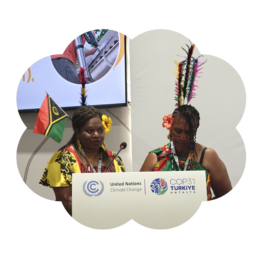
Technical Solutions | Vanuatu
Vanuatu Women Lighting the Way to Energy Security
Organisation: ActionAid Vanuatu / Women I Tok Tok Tugeta (WITT)
Representative: Dalila Laus Lalulu
In Vanuatu, nearly 34% of the population lacks access to electricity, particularly in rural areas. For women, this means more than going without power: it can limit their safety, health, access to technology and opportunities for financial independence. Women I Tok Tok Tugeta (WITTT), together with ActionAid Vanuatu, is working to change this by training women in North Tanna to install and maintain solar energy systems using repurposed lithium-ion batteries from electronic waste. The initiative is helping communities access reliable, renewable energy while enabling women to build the skills and autonomy to shape their own energy future.
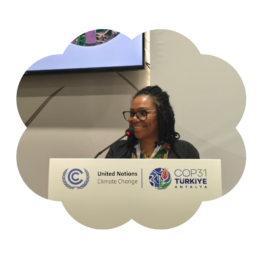
Non-Technical Solutions | Colombia
Afro-Colombian Women Building Resilience and Inclusion
Organisation: Federación Afroamerica XXI
Representative: Elvia Duque
In Dagua, Valle del Cauca, Afro-Colombian farming communities face growing climate challenges, including irregular rainfall and soil degradation. Federación Afroamerica XXI works alongside Afro-Colombian women farmers to strengthen climate-resilient agriculture through organic cacao production, community training and peer learning. By sharing knowledge and challenging discrimination, women are building more inclusive farming communities and creating new economic opportunities through cacao production.
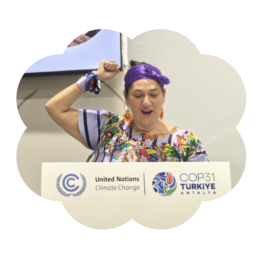
Transformational Solutions | Mexico
Tierra Fértil – Rural Women’s Leadership for Land Tenure Rights and Autonomy
Organisation: Proyecto Concentrarte A.C.
Representative: Liliana Riva Palacio
In rural Chiapas, Proyecto Concentrarte A.C. has worked with the Mujeres del Huerto collective since 2019 to strengthen women’s leadership and build a rural enterprise rooted in agroecology and food sovereignty. In 2024, the women reached a historic milestone by securing legal ownership of land for the first time. Today, around 70 women and girls manage their harvests, savings and collective decisions, while developing a women-led bakery as their next step towards greater economic autonomy and self-management.
Different solutions, shared commitments
From solar energy in Vanuatu to resilient farming in Colombia and land rights in Mexico, these initiatives reflect the many ways women are shaping climate action in their communities. While their approaches differ, they share a commitment to strengthening women’s autonomy, advancing their rights and building more equitable relationships.
Together, the 2026 awardees demonstrate that gender-just climate action is already happening. Women are developing solutions, challenging longstanding inequalities and creating alternatives that benefit their communities and future generations.
Recognising and supporting these initiatives means investing in solutions that already exist, in the women sustaining them and in their power to shape a more just climate future.
Want to hear more from the 2026 awardees?
Journalists, media outlets and communication platforms interested in featuring the awardees and their initiatives are welcome to get in touch.
For interviews requests with the awardees or programme representatives, please email Clara Lezziero, clara.lezziero@wecf.org
The lead of the GJCS programme, the Women and Gender Constituency (WGC) is one of the nine stakeholder constituencies of the United Nations Framework Convention on Climate Change (UNFCCC). Established in 2009, it brings together 54 women’s and gender organisations from around the world working to ensure that gender equality and human rights are at the core of the climate action agenda.
Photo credits: Latinas por el Clima
