
Perspectives on Women's Land Rights at WLRI Convening in Nairobi
Nairobi, Kenya | 29 June – 2 July 2026
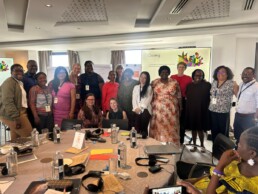
The fourth in-person convening of the Women’s Land Rights Initiative (WLRI) was held in Nairobi in Kenya. The event brought together Indigenous women leaders, grassroots organisations, government representatives, donors, and the Secretariats of the three Rio Conventions to strengthen collective action on women’s land rights.
The four-day convening highlighted that secure land rights for women are essential for advancing gender equality, climate resilience, biodiversity conservation, and sustainable land management. It also created a platform to connect community experiences with national and global policy processes.
Sharing experiences
Representing WECF’s grassroots partners was Branis Sianto, a young Maasai woman from Kenya’s Paran Women Group. Branis shared the experiences of Maasai and Ogiek women, whose access to and control over land remain limited despite their important role in managing natural resources and sustaining their communities.
“This was one of the best learning and experience-sharing platforms I have ever attended. It was inspiring to hear how women from different countries are addressing similar challenges and to share the experiences of Indigenous women from Kenya.” – Branis Sianto
Participants exchanged succes stories and challenges, explored advocacy approaches from different contexts, and discussed ways to strengthen the role of grassroots organisations in influencing policy. Key recommendations included documenting community experiences through case studies and impact stories, increasing resources for local organisations, and establishing stronger accountability mechanisms to ensure women’s voices are represented in decision-making.
The convening also highlighted the importance of collaboration among stakeholders, including government institutions, gender and land experts, traditional leaders, civil society organisations, UN agencies, donors, and the private sector. Stronger coordination between these actors was recognised as critical to translating international commitments into meaningful action at national level.
A space for collaboration
For WECF, a major outcome of the convening was the strengthened collaboration between grassroots organisations and representatives of the three Rio Conventions: the UN Framework Convention on Climate Change (UNFCCC), the Convention on Biological Diversity (CBD) and the UN Convention to Combat Desertification (UNCCD).
According to WECF’s Annabel, the convening provided an important strategic space to develop joint messaging on women’s land rights and ensure these issues are better reflected in global environmental agreements.
Sevidzem Emmacualte Berinyuy from Cameroon also represented WECF’s partners at WLRI. She gained valuable knowledge and networks through the event. Additionally, she shared CAMGEW’s experiences, successes, challenges, and lessons from work on environmental conservation, women’s employment, and community development. The convening strengthened her understanding of the links between women’s land rights, climate action, biodiversity conservation, and food security, while motivating her to apply the knowledge gained by training local stakeholders, building partnerships and promoting inclusive land governance in Cameroon.
Local to global action
The event demonstrated that when grassroots experiences are combined with coordinated advocacy and strategic partnerships, local realities can influence global policy agendas.
The discussions in Nairobi reaffirmed a shared commitment among participants: lasting solutions to climate change, biodiversity loss, and land degradation require women to have secure rights to the land they protect, cultivate and depend upon.

