
EQUALITY IS CENTRAL TO CLIMATE ACTION
philanthropy and civil society in discussion at PHILEA 2026
In the first week of June, 900 participants gathered at the PHILEA (Philanthropy Europe Association) Forum in Copenhagen Denmark, for networking and strategizing. WECF was invited to facilitate and co-organise a session on equality and climate action together with GEDI, the working group on Gender Quality, Diversity and Inclusion. This is a key topic in times of anti-rights pushback.
The session was well attended and opened by the directors of two well-known foundations, the Fondation Chanel, and the Fundacio la Caixa, who urged to jointly strategize about the important link between gender-equality and climate action, and that we were going to learn and strategize together. They also encouraged philanthropists to read the publication “Proven Practices of Gender Mainstreaming” by the GEDI network.

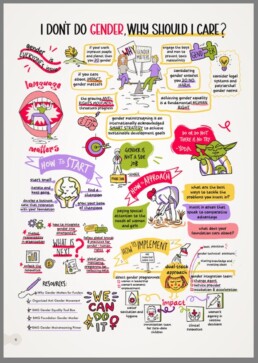
Cover and illustration of the publication “Proven Practices of Gender Mainstreaming” by the GEDI network, source Philea
Nataša Ivaneža of the Reconstruction Women’s Fund in Serbia, shared how a strong coalition of civil society, led by local women and feminist groups, were successful in getting global attention for the problematic lithium mining plans in the Western Balkans. Natasha called on funders to understand that we don’t live our lives in siloes and women’s rights activists must be empowered to choose their strategies and priorities, especially when linked to the global struggle for climate justice.
Dorde Jovanovic of the European Roma Rights Centre based in Brussels, shared his personal struggle coming from a Roma family, often excluded and discriminated, and the double discrimination of queer Roma rights activists, to the importance of traditional and climate-saving knowledge that is often still treasured and guarded in communities such as the Roma communities in Eastern Europe.
Steven Birtwistle of the Laudes Foundation based in Switzerland, shared the importance of funders like them, in truly bringing an intersectional approach into all their processes from selection of grantees to guidelines for reporting, and the importance of sharing these approaches and tools within the PHILEA network on Gender Equality, Diversity and Inclusion (GEDI).
Sascha Gabizon, executive director of WECF International, summarized the key messages from the panellists and moved to breakout groups to strategize about what steps funders and grantees can take together to resist the anti-rights backlash, and continue to centre equality and climate action in their work. The discussions brought forward two different positions, those who strongly continue to work with feminist and climate language in their work, grant making and communication, and a second group continuing to do so as well, but using more veiled language in reaching the same goals, especially when working with for example the Trump administration. Sascha encouraged all participants to continue to strengthen climate and feminist movements, in. all manners possible.

There were many other exciting discussions taking place including a session on “the cost of neutrality” around the question of political engagement by private philanthropy, or not, with a nice “fishbowl” format where all participants could join the debate. Sascha Gabizon of WECF spoke on the experience of anti-rights attacks against eco-feminist organisations, and how anti-rights governments such as in the country Georgia have made it impossible for local groups to get support from Philanthropy, and why it is so important that Philanthropy stands up and speaks loudly in support of support to civil society.
PHILEA 2026 was a well-organised networking event, aligning participants to resist the roll-back and stand strong on human rights and planetary protection.

Plenary session on the “Common Good Economy”

Session at PHILEA forum on the cost of neutrality

Discussion session at Philea 2026

